If reading has become a daily struggle, this page is for you.
When you have watched your child work hard and still fall behind, it helps to know that reading is a skill with a structure, and that structure can be taught. Structured literacy intervention teaches it explicitly and in order.
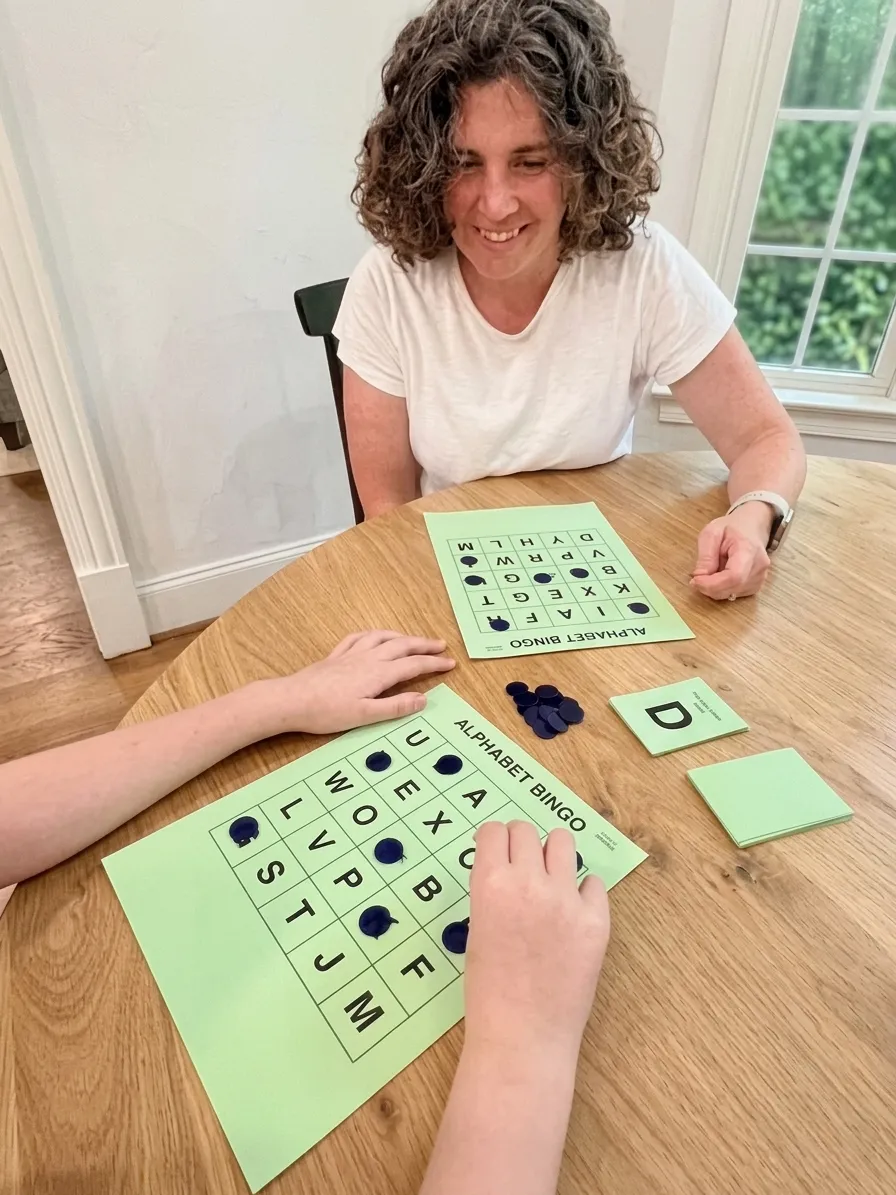
You may have tried some of these already.
Extra reading at home
A tutor for homework
Apps and workbooks
Summer programs
Each of those does a real job. Diagnostic teaching does a different one: it teaches the sound-symbol system itself, outright and in order. Whatever you have tried so far, none of it means anyone fell short.
Dyslexia is about how the brain processes language, not intelligence or effort.
The Yale Center for Dyslexia and Creativity describes dyslexia as an unexpected difficulty, unexpected because it appears in children who have the intelligence to read much better than they do. That is part of why it is so confusing to everyone around them. What structured literacy intervention does is teach the sound-symbol system directly.
A specific difficulty connecting sounds to letters, holding those patterns, and retrieving them quickly. It’s rooted in how the brain processes written language.
A measure of how bright a child is, how hard they are working, or how they are being raised at home. The International Dyslexia Association’s definition describes difficulties that persist even with instruction that is effective for a child’s peers, and that do not resolve on their own.
The rules of written English, taught where a child can see them.
Less effort
The aim is automaticity, so that decoding asks less of a child’s attention.
Room for meaning
The reason to build the mechanics first is that comprehension depends on them being in place.
Room for confidence
Progress is tracked in a way a child can see for themselves, not only reported to a parent.
A clear path, from first call to first session.
01
A free consult
A 30-minute conversation about your child’s reading history and whether this approach fits, with nothing to decide on the call.
02
An assessment
Before intervention begins, an assessment establishes exactly where your child is, so the plan is built for them specifically.
03
Consistent sessions
Three one-to-one sessions per week, 60 minutes each, following a structured sequence that builds steadily over time.
A few places to start reading.

Is my child dyslexic, or just a slow reader?
How to tell the difference at home, and the steps to take next.
Read the article
Why reading problems surface in third and fourth grade
What changes around third grade, why hidden struggles surface, and what to do.
Read the article
Tutoring vs structured literacy intervention
How to tell whether a struggling reader needs tutoring or intervention.
Read the articleWhat parents ask first.
How long will this take?
There is no fixed timeline, as structured literacy relies on automatic mastery rather than moving through a set curriculum. I recommend beginning with a block of about 36 sessions (three times a week for 60 minutes) to establish room for the sequence to build on itself. Overall duration depends on your child’s age, starting profile, processing speed, and schedule consistency. Progress is reviewed regularly to adjust the plan, so skills become secure and automatic rather than rushing ahead and creating gaps.
How long before we see it working?
There is no set answer, and it would not be honest to give one. How soon change shows depends on the student — their starting point, their profile, and how consistently sessions are held — so it varies from one child to the next. Progress is gradual rather than sudden, and we review how it is going together as we go, against where your child started.
How will we know it’s working?
Progress is tracked against a baseline. The starting assessment sets it, and from there we watch for steadier decoding, easier spelling, and less avoidance. At home, note how your child approaches a book now compared with the first weeks. We talk through how it is going along the way.
Is this my fault?
No. Dyslexia is neurobiological and often runs in families.1 It is not caused by parenting, screen time, or a lack of effort, and it is not something a child simply outgrows. The IDA describes explicit, systematic instruction in the structure of language as what dyslexia calls for.
Is it too late for my child?
No. The International Dyslexia Association’s definition is explicit that identification and targeted instruction matter at any age, and the sequence starts wherever a student’s skills actually are.
How do I find out if my child has dyslexia?
A formal diagnosis comes from a licensed psychologist or educational diagnostician, and you do not need one to begin. A short assessment shows where your child is and whether this work fits. If a full evaluation would help, I’ll point you in the right direction.

Let’s take a look together.
A free 30-minute consult to talk through what you have seen at home and whether this approach suits your child. There’s no pressure, only a clear next step.
Book ConsultJust have a question?