A structured, explicit way to teach reading.
If reading is costing your child more than it should, this page explains why that happens and what the work here actually looks like.
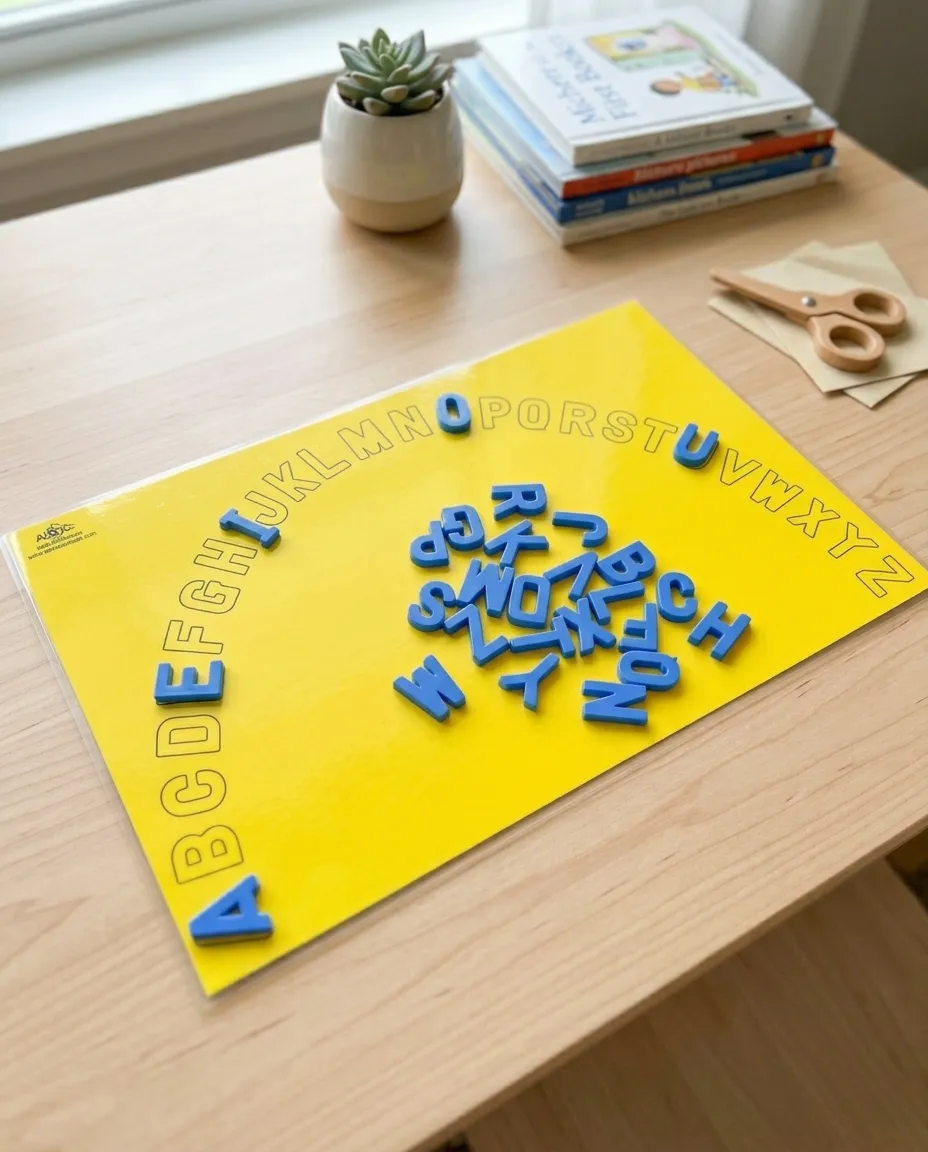
What a classroom teaches well, and what dyslexia asks for on top of it.
A teacher with a full classroom teaches the sound-symbol patterns, and the pacing is built for children who pick them up within a few passes. That pacing is right for the room it was designed for.
A child with dyslexia needs those same patterns taught more directly and practiced far more often than a group schedule is built around. That difference has nothing to do with how bright your child is or how hard they are trying, and it is no one’s failing.
But it is more than pace and repetition. It starts by understanding where reading is breaking down for your child, and why — and because the work moves through the full sequence from the beginning, that understanding is what shapes where the focus falls and how each step is taught.
A method developed in the 1930s for readers who do not pick the code up on their own.
Explicit
Nothing is left for the student to infer. Every sound, letter pattern, and rule is taught directly and named, so the logic of written English becomes visible.
Systematic and cumulative
Every skill leans on the one that’s already solid, and everything taught keeps being practiced. Nothing drops out of the rotation.
Multisensory
Seeing, hearing, saying, and writing happen together, so a skill has more than one way in.
What a typical hour looks like.
01
Review and warm up
Each session begins by revisiting patterns already learned, so they stay automatic and the student starts on solid, familiar ground.
02
Introduce and practice
A new sound, pattern, or rule is introduced explicitly, then practiced through reading, spelling, and writing in the same sitting.
03
Apply and connect
The student applies the skill to real reading, so each piece connects to the larger goal of reading with ease and understanding.
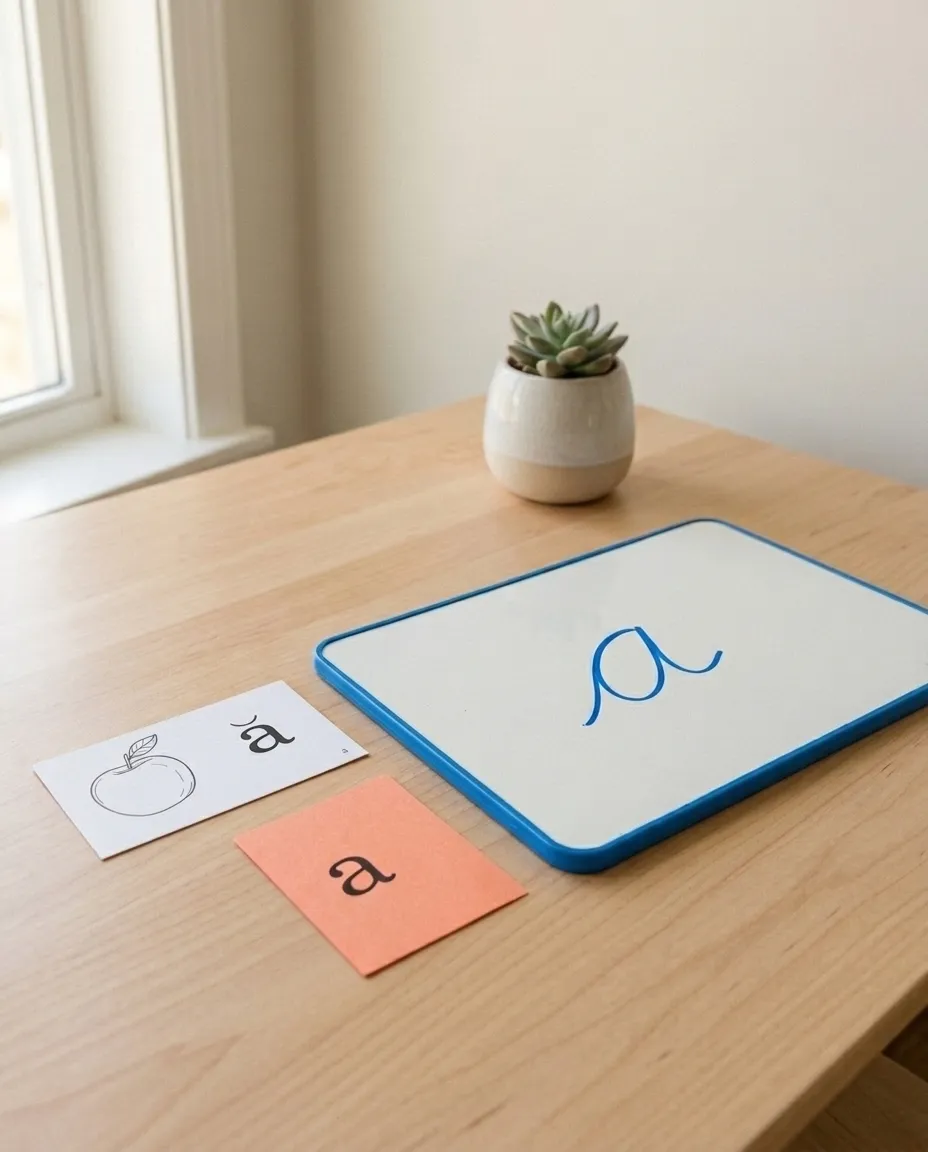
The sequence is fixed. The teaching is not.
When something is not holding, the useful question is not whether to repeat the lesson, but what exactly went wrong. Is the eye losing its place on the line, or has the keyword come loose from its sound? Each problem takes a different answer, and what I reach for is shaped by what the last session showed.
Working that out is the part a sequence alone cannot supply, and it is what the supervised practicum trains.
Grounded in decades of reading research.
Structured literacy is an approach rather than a single program. It reflects a broad body of research, often called the science of reading, into how the brain learns to read and what helps when that process doesn’t come naturally. The methods used here are drawn from that research and from established, well-documented training in the field.
The International Dyslexia Association defines dyslexia as a specific learning disability characterized by difficulties in word reading and spelling that persist even with instruction effective for the student’s peers. Underlying difficulties with phonological and morphological processing are common but not universal. The work of intervention is to teach the structure of language explicitly, building the skills that are not being acquired implicitly. The Association describes effective instruction for dyslexia as explicit, systematic and cumulative, taught in a deliberate sequence and adjusted to what each student has actually secured.
Sources
The International Dyslexia Association sets out both its definition of dyslexia and an overview of what structured literacy is, the approach this practice follows and the reading difficulties it addresses.
The Academy of Orton-Gillingham Practitioners and Educators describes the principles of the Orton-Gillingham Approach, the language-based, multisensory method at the foundation of every session here.
The National Institute of Child Health and Human Development summarizes the National Reading Panel’s findings on systematic phonics instruction, part of the decades of research behind structured literacy.
The Yale Center for Dyslexia & Creativity explains what dyslexia is and the brain research behind it, drawing on the work of Drs. Sally and Bennett Shaywitz.
Sounds in Syllables, developed by Sandra Dillon, is the Orton-Gillingham curriculum taught in every session.
Questions about the approach.
Is Orton-Gillingham a program I can buy?
No. It’s an approach, a set of principles for teaching reading, rather than a fixed program or workbook. It’s adapted to each student rather than delivered the same way to everyone.
How is this different from a reading tutor?
A tutor supports the schoolwork a child already has. Intervention teaches the reading skills that schoolwork depends on, in a fixed sequence built for students with dyslexia. Which one fits depends on whether those foundational skills are in place.
Does my child need a diagnosis first?
No. A formal diagnosis isn’t required to begin. An initial assessment establishes where your child is and whether this approach is a good fit.
Will this work for my child specifically?
The consult and assessment exist to determine fit, and that is the only way to answer it for your child. If it isn’t the right approach, you will hear that from me.
How quickly will we see results?
Progress is gradual and cumulative rather than sudden, and there is no timeline I can promise before we begin. How soon change shows depends on the student and on how consistently sessions are held, so it differs from one child to the next. What I can tell you is what we will be watching for, and we review it together as we go.
See what fits your child.
The best way to understand the approach is to talk through your child’s reading with someone trained in it. The consult is free, and nothing is decided on the call.
Book ConsultJust have a question?